GHK-Cu
At a glance
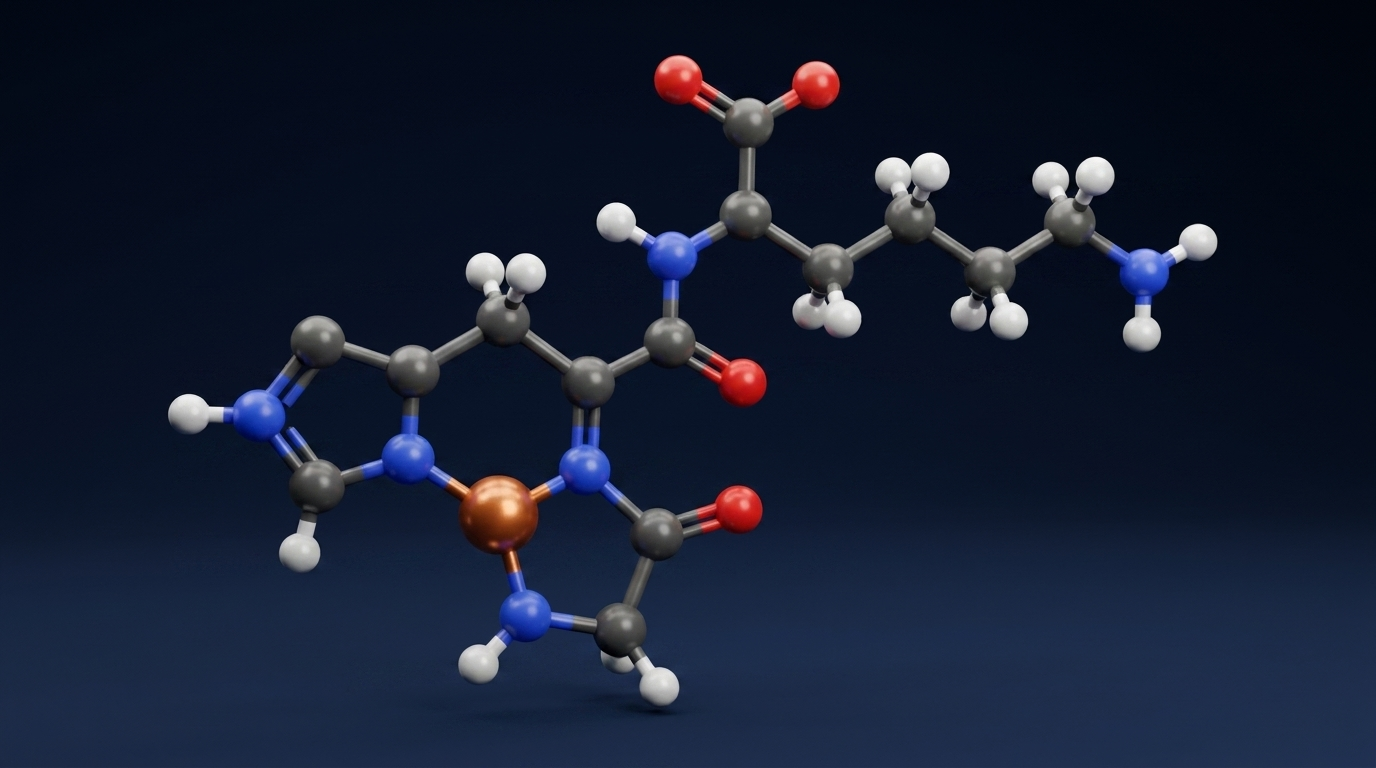
GHK-Cu is a naturally occurring copper complex of the human tripeptide glycyl-L-histidyl-L-lysine (GHK). It has been extensively investigated for its multifaceted biological activities, including roles in wound healing, skin rejuvenation, and anti-aging processes. Research also explores its potential neuroprotective effects, attributed to its antioxidant, anti-inflammatory, and regenerative properties. Evidence for these applications is primarily derived from *in vitro* studies, animal models, and experimental research.
Identity
| Molecular formula | C14H21CuN6O4- |
|---|---|
| Molecular weight | 400.90 g/mol |
| PubChem CID | 139035031 |
| Class | Cosmetic & Skin |
Explore GHK-Cu by topic
- GHK-Cu: Benefits & Effects
- GHK-Cu: Brain & Nervous System
- GHK-Cu: Comparisons & Stacks
- GHK-Cu: Dosing, Forms & Administration
- GHK-Cu: Healing & Tissue Repair
- GHK-Cu: Mechanisms & How It Works
- GHK-Cu: Metabolic & Body Composition
- GHK-Cu: Practical & Buying Guidance
- GHK-Cu: Research Evidence & Trials
- GHK-Cu: Safety, Side Effects & Regulation
Every question we answered (40)
- How does the copper peptide GHK-Cu function at the molecular level to promote wound healing?
- What evidence supports the use of GHK-Cu in the acceleration of wound healing processes?
- What are the potential benefits of GHK-Cu in the context of skin rejuvenation and anti-aging treatments?
- How does GHK-Cu interact with the nervous system, and what are its implications for neurodegenerative diseases?
- What role does GHK-Cu play in the regulation of copper metabolism within the human body?
- What are the recommended dosing guidelines for GHK-Cu to ensure optimal effectiveness and safety?
- Are there any known side effects or safety concerns associated with the use of GHK-Cu in medical treatments?
- What clinical studies provide evidence for the effectiveness of GHK-Cu in promoting tissue repair and regeneration?
- How does the efficacy of GHK-Cu compare to other peptide-based treatments in terms of wound healing and tissue regeneration?
- What are some practical considerations when incorporating GHK-Cu into a skincare routine or medical treatment protocol?
- What is the molecular mechanism by which GHK-Cu enhances collagen production in the skin?
- How does GHK-Cu contribute to the management of chronic wounds, and what is the scientific basis for its use?
- What are the documented benefits of GHK-Cu in improving skin elasticity and reducing the appearance of fine lines and wrinkles?
- What research supports the neuroprotective effects of GHK-Cu, and how might it be utilized in the treatment of neurological disorders?
- How does GHK-Cu influence copper homeostasis, and what are the potential health implications of these effects?
- What factors should be considered when determining the appropriate dosage of GHK-Cu for individual patients?
- Are there any contraindications or precautions that should be taken into account when using GHK-Cu in medical applications?
- What clinical trials have been conducted to evaluate the safety and efficacy of GHK-Cu in various medical conditions?
- How does GHK-Cu compare to other copper-containing compounds in terms of bioavailability and therapeutic potential?
- What are some practical tips for healthcare professionals when administering GHK-Cu to patients?
- What is the role of GHK-Cu in modulating the expression of genes related to wound healing and tissue regeneration?
- How does GHK-Cu facilitate the healing process in烧伤 and other types of skin injuries?
- What are the potential benefits of GHK-Cu in the treatment of acne and acne scars?
- How does GHK-Cu affect neural cell survival and function, and what are its implications for neurodegenerative diseases?
- What is the impact of GHK-Cu on copper metabolism, and how does it influence overall health and well-being?
- What is the optimal dosing schedule for GHK-Cu to maximize its therapeutic effects while minimizing potential side effects?
- What are the short-term and long-term safety profiles of GHK-Cu, and how do they compare to other peptide-based treatments?
- What preclinical and clinical studies have demonstrated the efficacy of GHK-Cu in promoting wound healing and tissue repair?
- How does the effectiveness of GHK-Cu compare to that of other growth factors and cytokines in wound healing applications?
- What are some practical considerations when incorporating GHK-Cu into a post-surgical care regimen?
- How does GHK-Cu interact with extracellular matrix components to facilitate tissue repair and regeneration?
- What is the role of GHK-Cu in the management of diabetic ulcers and other chronic wounds?
- What are the potential benefits of GHK-Cu in the treatment of hair loss and promotion of hair growth?
- How does GHK-Cu influence neural plasticity and regeneration, and what are its implications for neurological disorders?
- What is the impact of GHK-Cu on copper metabolism in various tissues, and how does it contribute to overall health?
- What factors influence the pharmacokinetics and pharmacodynamics of GHK-Cu, and how do they affect dosing recommendations?
- What are the potential adverse effects of GHK-Cu, and how can they be minimized to ensure patient safety?
- What clinical evidence supports the use of GHK-Cu in the treatment of various medical conditions, including wound healing and neurodegenerative diseases?
- How does the efficacy and safety profile of GHK-Cu compare to that of other peptide-based treatments for wound healing and tissue regeneration?
- What are some practical tips for incorporating GHK-Cu into a skincare regimen for the management of aging skin?
References
- Cosmeceuticals and Active Cosmetics
- GHK Peptide as a Natural Modulator of Multiple Cellular — Loren Pickart
- GHK and DNA Resetting the Human Genome to Health — Loren Pickart
- GHK-Cu may Prevent Oxidative Stress in Skin by Regulating — Pickart, Loren
- Skin Regenerative and Anti-Cancer Actions of Copper Peptides — Pickart, Loren
- Stimulation of collagen synthesis in fibroblast cultures by — F X Maquart
- The Effect of the Human Peptide GHK on Gene Expression — Pickart, Loren
- The human tri-peptide GHK and tissue remodeling — Loren Pickart(Skin Biology, 4122 Factoria Boulevard
- Ternary Cu(II) Complex with GHK Peptide and Cis-Urocanic — Bossak-Ahmad, Karolina
- The Human Tripeptide GHK-Cu in Prevention of Oxidative — Loren Pickart
- GHK Copper Peptides for Skin and Hair Beauty — Pickart PhD, Dr Loren
- Super Human
- Boundless Upgrade Your Brain, Optimize Your Body and Defy — Ben Greenfield
- Endocrinology_ Adult and Pediatric
- GHRH, GH, and IGF-1_ Basic and Clinical Advances
- Peptide Protocols Volume One — William A Seeds MD
- Basic and Clinical Aspects of Growth Hormone
- Live Longer, Live Well_ The 6 Lifestyle Pillars for a Long and Healthy Life
- Handbook of Biologically Active Peptides
- Life Force
- Williams Textbook of Endocrinology
- Erythropoietin doping and detection
- Goodman and Gilman's The Pharmacological Basis of Therapeutics
- Principles and Practice of the Biologic Therapy of Cancer
- Therapeutic Peptides and Proteins Formulation, Processing — Ajay K Banga
Continue your journey
What patent-, label-, and trademark‑safe formulation strategies let a European seller differentiate a GHK-Cu topical while avoiding regulatory reclassification into a medicinal product?What are the potential benefits of GHK-Cu in the context of skin rejuvenation and anti-aging treatments?What are some practical considerations when incorporating GHK-Cu into a skincare routine or medical treatment protocol?Which commercially sold “GHK-Cu” topical formulations in the EU contain the declared peptide sequence and copper complex at functional purity, and how do stability and preservatives affect potency over typical e‑commerce shipping times to Romania?If GHK-Cu successfully “resets” 4,000 genes to a youthful state, what happens to the epigenetic memory of the cells that were intentionally adapted to the individual’s specific environmental stressors?How does AHK-Cu compare to other copper-based compounds like copper peptides (GHK-Cu) in terms of bioavailability, stability, and efficacy in skin regeneration?