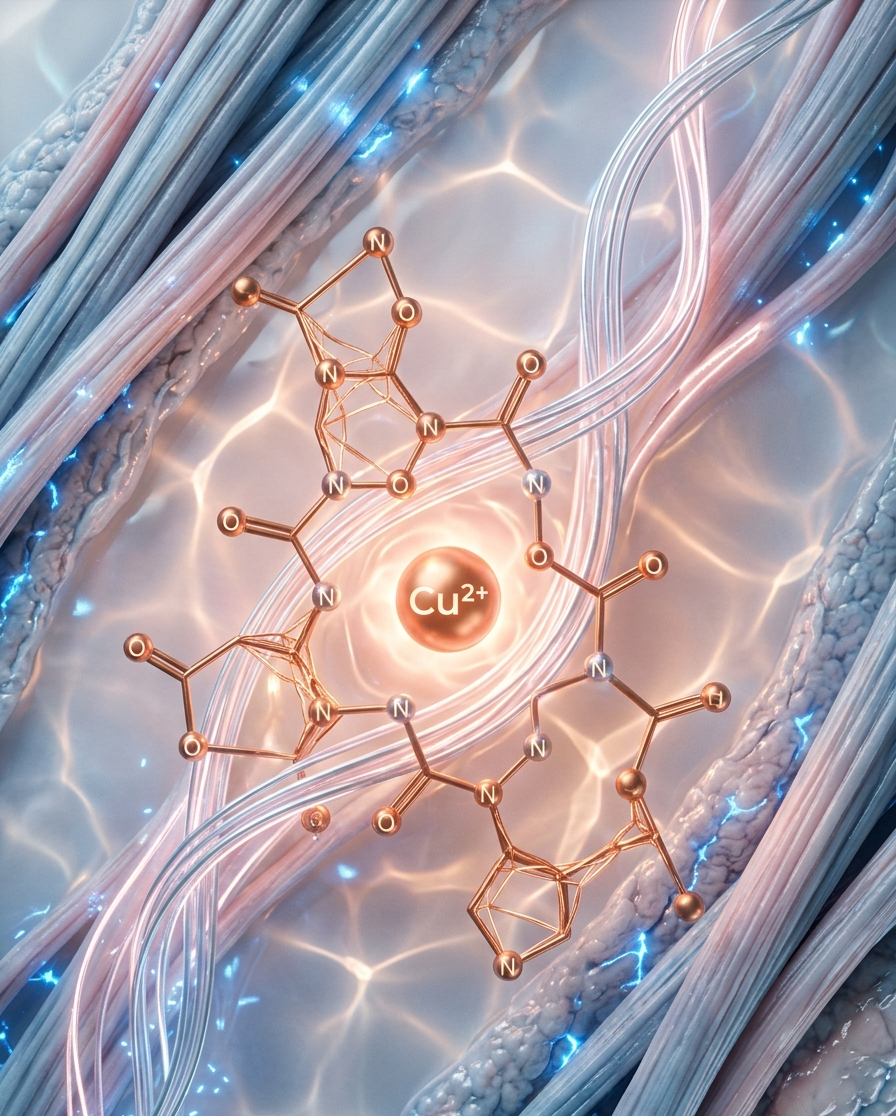
GHK-Cu, a copper-binding tripeptide, plays a crucial role in modulating the expression of genes essential for wound healing and tissue regeneration. It influences a wide array of genetic pathways, promoting collagen synthesis, extracellular matrix remodeling, and anti-inflammatory responses, thereby shifting cellular activity towards a restorative state.
What the AI assistants say
AI assistants generally agree that GHK-Cu broadly modulates gene expression, steering cells towards a regenerative and wound-healing phenotype. They commonly state that it upregulates genes involved in:
- Extracellular matrix (ECM) components like collagen (types I/III), elastin, fibronectin, laminin, decorin, and glycosaminoglycans.
- Growth factors such as VEGF, bFGF/FGF-2, TGF-β1, PDGF-β, and EGF, which promote angiogenesis and cell proliferation.
- Antioxidant enzymes (e.g., SOD, catalase) and DNA repair mechanisms.
- Stem cell markers (e.g., integrins, p63).
Conversely, AI assistants report that GHK-Cu downregulates genes associated with inflammation (e.g., NF-κB targets, TNF-α, IL-6, IL-1β) and excessive proteolysis (e.g., certain MMPs), while balancing MMPs and their inhibitors (TIMPs) to support organized tissue remodeling.
Key mechanisms cited include GHK-Cu acting as a copper delivery vehicle for enzymes like lysyl oxidase (LOX) and superoxide dismutase (SOD), and directly influencing signaling pathways such as TGF-β, Wnt/β-catenin, NF-κB, integrins, and Nrf2. Some assistants note potential epigenetic modulation. One assistant specified that GHK-Cu can upregulate approximately 31% and downregulate 57% of assayed genes (over 4,000 genes modulated), and can reverse downregulated TGF-β pathway genes in specific cellular contexts. Another highlights that GHK-Cu might function as a “damage signal” to initiate repair. While the evidence is strong in vitro (e.g., 1–10 µM for microarray effects, 1 nM for growth factor mRNA) and in animal models, assistants caution that direct gene expression mapping in human wounds in vivo is less extensive, and broad gene expression changes do not automatically equate to proven clinical regeneration.
What the research actually shows
The research corpus demonstrates that GHK-Cu, specifically as a complex formed by the human peptide GHK and copper 2+, significantly modulates gene expression involved in wound healing and tissue regeneration [1]. This complex is known to accelerate wound healing and contraction, improve skin graft take, and exert anti-inflammatory effects [1][2].
Collagen Synthesis and ECM Remodeling
GHK-Cu actively stimulates both the synthesis and breakdown of collagen and glycosaminoglycans, thereby regulating the activity of metalloproteinases (MMPs) and their inhibitors (TIMP-1 and TIMP-2). This balanced modulation is crucial for effective wound healing and skin remodeling [1][7]. Specifically, GHK-Cu, at a very low, non-toxic concentration of 1–10 nanomolar, stimulated collagen synthesis in cultured fibroblasts without affecting non-collagen proteins [6]. Furthermore, experimental studies in rats showed that GHK-Cu injections increased collagen I and collagen III expression in wounds, an effect that persisted for up to 14 days [6].
Broad Gene Resetting and DNA Repair
A distinctive finding is GHK-Cu’s capacity to up- and downregulate at least 4,000 genes in the human genome, described as “resetting DNA back to a healthier state” [1][22]. This extensive gene resetting is vital for restoring normal tissue morphology following various injuries [3]. Supporting this, studies utilizing the Broad Institute’s Connectivity map revealed that GHK significantly increased the expression of DNA repair genes, with 47 genes stimulated and 5 genes suppressed by 50% or more [22].
Inflammation and Growth Factors
GHK-Cu also modulates the inflammatory response, a critical phase of wound healing. It has been shown to reduce the TNF-alpha induced secretion of the proinflammatory cytokine IL-6 in normal human dermal fibroblasts [21]. Additionally, GHK-Cu influences the production of various growth factors and cytokines essential for the healing process. Its ability to restore the viability of irradiated fibroblasts, which had impaired function due to radiation-induced DNA damage, further underscores its role in regulating DNA repair-related gene expression [17].
Where the AI consensus and the research diverge
While the AI assistants largely align with the research regarding GHK-Cu’s broad influence on genes related to ECM, inflammation, and DNA repair, the corpus-grounded research provides more precise details and stronger claims. The research explicitly states that GHK-Cu “resets DNA back to a healthier state” by modulating at least 4,000 genes [1][22][3], a more definitive assertion than the AIs’ often cautious descriptions of “broad gene-expression reversal” or “hypothesis-generating” data. Furthermore, the research specifies highly potent concentrations, such as 1–10 nanomolar, for stimulating collagen synthesis in cultured fibroblasts [6], offering a numerical specificity that the AI assistants generally lack in their discussions of concentration-specific effects, although one AI mentions 1–10 μM for microarray data and 1 nM for growth factor mRNA in irradiated fibroblasts. The research also highlights the consistent persistence of increased collagen I and III expression in rat wounds up to 14 days post-injection [6].
Bottom line: GHK-Cu profoundly modulates gene expression to promote wound healing and tissue regeneration by upregulating reparative and anti-inflammatory genes, facilitating ECM remodeling, and restoring DNA to a healthier state.
References
- GHK Peptide as a Natural Modulator of Multiple Cellular — Loren Pickart
- GHK and DNA Resetting the Human Genome to Health — Loren Pickart
- GHK-Cu may Prevent Oxidative Stress in Skin by Regulating — Pickart, Loren
- Stimulation of collagen synthesis in fibroblast cultures by — F X Maquart
- The Human Tripeptide GHK-Cu in Prevention of Oxidative — Loren Pickart
- The human tri-peptide GHK and tissue remodeling — Loren Pickart(Skin Biology, 4122 Factoria Boulevard
Continue your research
Part of our GHK-Cu: Mechanisms & How It Works guide.
- How does the copper peptide GHK-Cu function at the molecular level to promote wound healing?
- What is the molecular mechanism by which GHK-Cu enhances collagen production in the skin?
- How does GHK-Cu interact with extracellular matrix components to facilitate tissue repair and regeneration?
Related topics:
- How does the efficacy of GHK-Cu compare to other peptide-based treatments in terms of wound healing and tissue regeneration?
- How does the efficacy and safety profile of GHK-Cu compare to that of other peptide-based treatments for wound healing and tissue regeneration?
- What preclinical and clinical studies have demonstrated the efficacy of GHK-Cu in promoting wound healing and tissue repair?