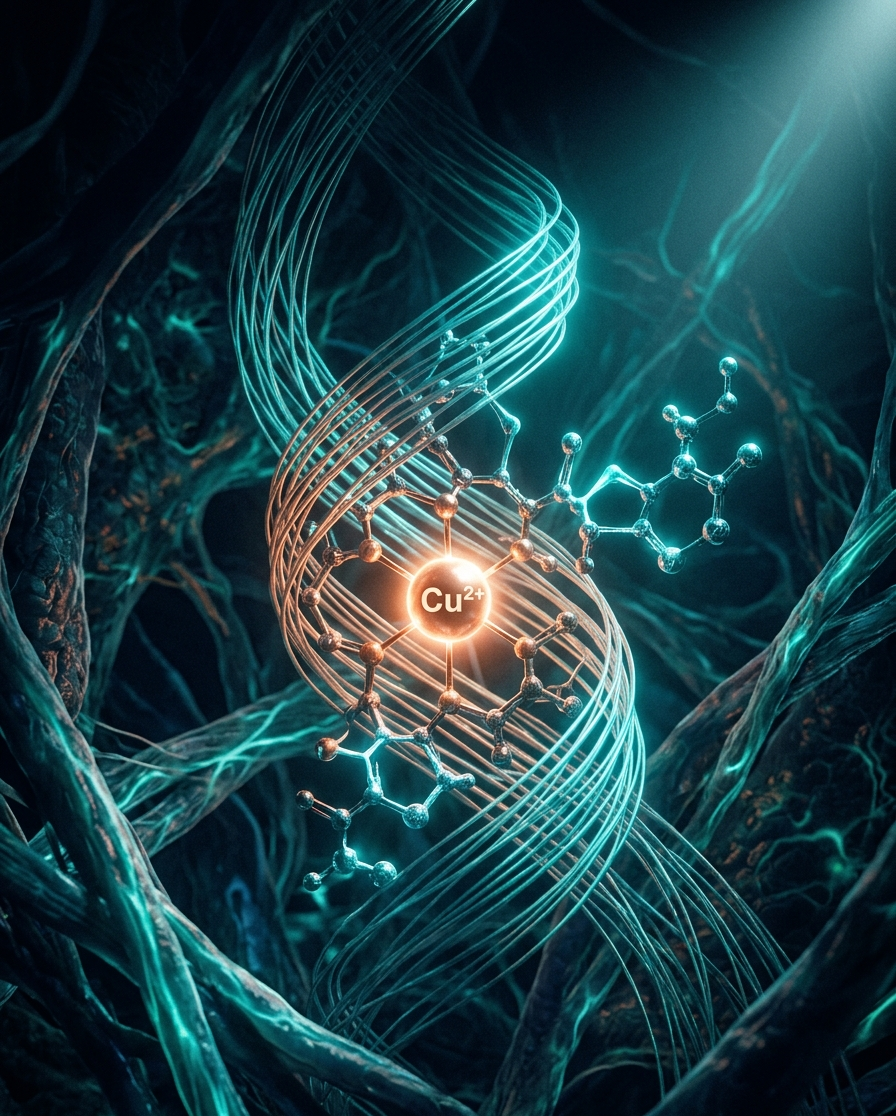
GHK-Cu influences copper metabolism by acting as a copper-binding and delivery system, enhancing copper bioavailability for cellular processes while buffering its potentially toxic redox activity. This mechanism contributes significantly to its documented roles in wound healing, tissue regeneration, skin health, and broader anti-inflammatory and antioxidant effects, thereby impacting overall well-being.
What the AI assistants say
The AI assistants generally agree that GHK-Cu, a tripeptide with high affinity for copper, acts primarily as a copper-binding and delivery system. They concur that it forms a stable complex with copper, which is crucial for making copper bioavailable to cells while simultaneously protecting against its potential pro-oxidant activity by silencing redox reactions. This mechanism is said to support the activity of copper-dependent enzymes, notably Lysyl Oxidase (LOX), which is vital for collagen and elastin cross-linking.
Consistently, the AI assistants highlight GHK-Cu’s role in wound healing, skin regeneration, and tissue remodeling, attributing these effects to its influence on collagen and elastin synthesis, as well as its anti-inflammatory and antioxidant properties. They also note its ability to modulate gene expression, shifting cellular processes towards healthier states.
However, there are some notable differences in emphasis. While all acknowledge GHK-Cu’s impact on copper metabolism, some assistants stress that it does not dramatically overhaul whole-body copper metabolism in healthy, copper-replete individuals and is not proven to control systemic copper balance. One assistant cautions that GHK-Cu may even drive oxidative stress in copper-replete individuals by raising ceruloplasmin without benefit, while another states it is not proven to correct specific copper deficiencies or disorders like Wilson’s disease. Regarding broader health claims, some assistants indicate that systemic “anti-aging” benefits or general “well-being” improvements in humans are not yet established or have weak evidence, with nervous system effects largely considered experimental in preclinical models.
One AI assistant also explicitly outlines potential risks, recommending caution or medical supervision for individuals with conditions such as Wilson’s disease, high serum copper, abnormal ceruloplasmin, liver disease, or active cancer. It also raises concerns about injectable GHK-Cu due to limited human safety data and potential immunogenicity risks cited by the FDA.
What the research actually shows
GHK-Cu, a complex formed by the human peptide glycyl-L-histidyl-L-lysine (GHK) and copper, plays a significant role in copper metabolism and has a profound impact on overall health and well-being. The peptide GHK has a strong affinity for copper, readily forming the complex GHK-Cu, which functions as a complex with copper 2+ [2]. This complex is naturally present in the body and is released from collagen after an injury, suggesting its importance in physiological processes [12].
One of the key functions of GHK-Cu is its role in wound healing and tissue regeneration. It has been established that GHK-Cu accelerates wound healing and contraction, improves the take of transplanted skin, and possesses anti-inflammatory actions [3–5]. This is further supported by the fact that GHK-Cu stimulates both synthesis and breakdown of collagen and glycosaminoglycans at very low, non-toxic concentrations (1–10 nanomolar) [6]. The ability of GHK-Cu to modulate the activity of metalloproteinases and their inhibitors makes it a main regulator of wound healing and skin remodeling processes [7, 8].
GHK-Cu also plays a crucial role in copper metabolism by regulating its bioavailability. It readily forms complexes with copper, which improves the bioavailability of copper, an essential trace element for various physiological functions [5]. The peptide can obtain copper ions bound to other molecules such as albumin, the main copper-transporting molecule in human plasma, enabling it to serve as a delivery vehicle for copper ions locally, for example, in a site of an injury [11].
In terms of overall health and well-being, GHK-Cu possesses antioxidant, anti-inflammatory, and regenerative properties. It improves circulation, supports stem cell functions, and promotes nerve outgrowth and synthesis of neurotrophic factors [6]. The antioxidant actions of GHK-Cu include inhibiting the formation of reactive carbonyl species (RCS), detoxifying toxic products of lipid peroxidation such as acrolein, protecting keratinocytes from lethal UVB radiation, and preventing hepatic damage by dichloromethane radicals [7].
Moreover, GHK-Cu has been found to switch gene expression from a diseased state to a healthier state for certain cancers and for chronic obstructive pulmonary disease (COPD). The Broad Institute’s Connectivity Map indicated that GHK induces a 50% or greater change of expression in 31.2% of human genes [17]. This suggests that GHK-Cu can potentially regulate a large number of genes, which may contribute to its broad-range anti-aging and health-supporting activity [20].
In addition to its impact on skin health and gene expression, GHK-Cu also influences cognitive health. It has been recommended as a treatment for conditions such as dementia, Alzheimer’s disease, and Parkinson’s disease, due to its effects on gene expression relevant to nervous system health and function [3].
Where the AI consensus and the research diverge
While both the AI assistants and the research corpus highlight GHK-Cu’s crucial role in localized copper delivery and its benefits for tissue repair, there are subtle differences in their framing of its broader impact. The AI assistants generally express more caution regarding GHK-Cu’s effect on whole-body copper metabolism, stating that it does not dramatically overhaul systemic copper regulation in copper-replete individuals and is not proven to correct specific copper disorders. The research corpus, while emphasizing GHK-Cu’s role in improving copper bioavailability locally, does not directly address the extent of its systemic metabolic impact or lack thereof.
A more pronounced divergence appears in the discussion of “anti-aging” and “general well-being.” Several AI assistants classify systemic anti-aging benefits and improvements in general well-being as “not established” or having “weak evidence” in humans. In contrast, the research corpus presents a more optimistic view, linking GHK-Cu’s ability to “switch gene expression from a diseased state to a healthier state” for certain conditions (e.g., COPD, cancers) and its influence on a significant percentage of human genes (31.2%) to “broad-range anti-aging and health-supporting activity” [20]. Similarly, regarding nervous system health, AI assistants tend to describe neural benefits as “preliminary” or “experimental” based on cell and animal models, whereas the research corpus states GHK-Cu “promotes nerve outgrowth and synthesis of neurotrophic factors” [6] and “has been recommended as a treatment for conditions such as dementia, Alzheimer’s disease, and Parkinson’s disease” [3], implying a more direct therapeutic potential.
Finally, it is noteworthy that while one AI assistant thoroughly discusses potential risks and cautions, including FDA warnings regarding injectable GHK-Cu, the provided research corpus does not include information on safety considerations or contraindications.
Bottom line: GHK-Cu primarily acts as a local copper delivery and buffering system, promoting tissue repair, antioxidant defenses, and beneficial gene expression, with research suggesting broad health-supporting potential including nervous system benefits, though more human data is needed for systemic anti-aging claims and comprehensive safety assessments.
References
- GHK Copper Peptides for Skin and Hair Beauty — Pickart PhD, Dr Loren
- GHK Peptide as a Natural Modulator of Multiple Cellular — Loren Pickart
- GHK and DNA Resetting the Human Genome to Health — Loren Pickart
- GHK-Cu may Prevent Oxidative Stress in Skin by Regulating — Pickart, Loren
- The Effect of the Human Peptide GHK on Gene Expression — Pickart, Loren
- The Human Tripeptide GHK-Cu in Prevention of Oxidative — Loren Pickart
- The human tri-peptide GHK and tissue remodeling — Loren Pickart(Skin Biology, 4122 Factoria Boulevard
Continue your research
Part of our GHK-Cu: Metabolic & Body Composition guide.
- What role does GHK-Cu play in the regulation of copper metabolism within the human body?
- How does GHK-Cu influence copper homeostasis, and what are the potential health implications of these effects?
- What is the impact of GHK-Cu on copper metabolism in various tissues, and how does it contribute to overall health?
Related topics:
- How does the copper peptide GHK-Cu function at the molecular level to promote wound healing?
- How does GHK-Cu compare to other copper-containing compounds in terms of bioavailability and therapeutic potential?
- How does GHK-Cu influence neural plasticity and regeneration, and what are its implications for neurological disorders?