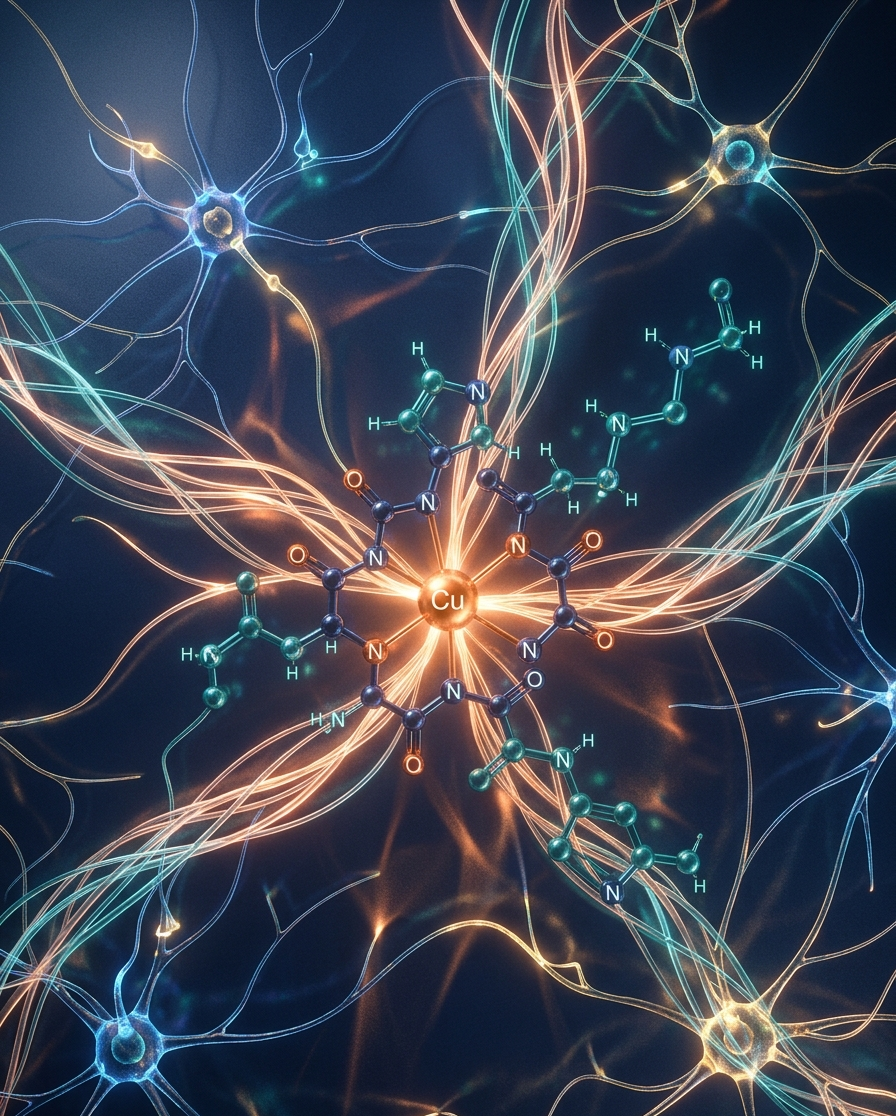
GHK-Cu, a naturally occurring copper-binding peptide, significantly influences neural cell survival and function through a diverse array of mechanisms including antioxidant activity, anti-inflammatory effects, neurotrophic support, and regulation of copper homeostasis. These actions collectively present a promising therapeutic potential for mitigating the progression and symptoms of neurodegenerative diseases, although current evidence is primarily preclinical.
What the AI assistants say
AI assistants collectively highlight GHK-Cu’s role in promoting neural cell survival and function through several interconnected mechanisms. They generally agree that GHK-Cu (glycyl-L-histidyl-L-lysine bound to Cu²⁺) is a naturally occurring tripeptide found in human plasma whose levels decline with age. Its neuroprotective effects are attributed to a multifaceted profile:
- Antioxidant Activity: GHK-Cu directly scavenges reactive oxygen species (ROS) and reactive nitrogen species (RNS) and upregulates endogenous antioxidant enzymes like superoxide dismutase (SOD), catalase, and glutathione peroxidase (GPx), thereby strengthening cellular defense against oxidative stress.
- Anti-inflammatory Effects: It downregulates pro-inflammatory cytokines (e.g., IL-6, TNF-α, IL-1β) and inhibits the NF-κB pathway, suppressing neuroinflammation caused by activated microglia and astrocytes.
- Neurotrophic Support and Regeneration: GHK-Cu upregulates crucial neurotrophic factors such as brain-derived neurotrophic factor (BDNF), nerve growth factor (NGF), NT-3, and NT-4, which are vital for neuronal survival, growth, and synaptic plasticity. It also promotes nerve outgrowth, regeneration (including accelerated nerve fiber regeneration in collagen tubes), and may influence neurogenesis and angiogenesis.
- Anti-apoptotic Effects: It downregulates neuronal apoptosis, protecting mitochondrial function, stabilizing mitochondrial membranes, and modulating the balance of pro-apoptotic (e.g., Bax, caspases) and anti-apoptotic (e.g., Bcl-2) proteins to favor cell survival. Some assistants note a context-dependent effect, where GHK-Cu may upregulate apoptosis in cancer cells (e.g., neuroblastoma).
- Copper Homeostasis and Chaperoning: GHK-Cu binds copper, facilitating its delivery to essential enzymes while preventing toxic accumulation of free copper ions, ensuring optimal neural function and protection against copper dyshomeostasis. Some also mention its ability to buffer zinc toxicity and prevent metal-induced protein aggregation (relevant to amyloid, tau, α-synuclein).
- Extracellular Matrix (ECM) Remodeling: Some assistants note its ability to remodel the ECM by promoting collagen and elastin synthesis and regulating matrix metalloproteinases, which can provide structural support for neurons and potentially reduce glial scarring after injury.
While there is a strong consensus on these mechanisms, AI assistants differ in the level of detail provided and the specific examples of evidence. Some elaborate on specific animal study outcomes, such as improved neurological recovery and reduced brain edema in rat intracerebral hemorrhage models, enhanced spatial memory and reduced neuroinflammatory/axonal-damage markers in aged mice, and delayed cognitive impairment, reduced amyloid plaques, and lowered inflammation in Alzheimer’s mouse models. They also consistently emphasize that while these findings are promising, the evidence base is overwhelmingly preclinical, primarily from *in vitro* (cell culture) and *in vivo* (animal) studies, with a significant lack of robust human clinical trials specifically for neurodegenerative diseases. One assistant explicitly discusses the “dose translation problem” from mouse to human and details what remains “not established” regarding human use (e.g., whether GHK-Cu reaches meaningful human brain levels, safe human CNS dose, best route of administration, pharmacokinetics, long-term effects on copper/zinc balance, and whether benefits require copper-bound GHK-Cu or free GHK).
What the research actually shows
Research demonstrates that GHK-Cu, the copper complex of the human tripeptide glycyl-L-histidyl-L-lysine, significantly impacts neural cell survival and function, offering potential implications for neurodegenerative disease prevention and treatment. Its actions are multifaceted, encompassing antioxidant, anti-inflammatory, and regenerative properties that address critical factors in neurodegeneration, including oxidative stress, neuroinflammation, and disrupted metal homeostasis [15], [6], [7], [8].
-
Gene Expression Modulation
GHK-Cu is shown to up- and downregulate a substantial number of human genes, particularly those vital for neuronal development and maintenance [16], [17]. This capability to alter gene expression may contribute to its pleiotropic health-promoting effects and could offer protective benefits by reversing gene silencing [6], [7].
-
Copper Homeostasis
Crucial for neural health, copper homeostasis is directly influenced by GHK-Cu. While copper is an essential trace element involved in neurotransmission, synaptic plasticity, and antioxidant defense, unregulated copper ions can heighten oxidative damage, highlighting a delicate balance [19], [21]. GHK-Cu forms nontoxic complexes with copper, which prevents its accumulation in senile plaques and increases its bioavailability. This is especially relevant in neurodegenerative disorders where copper metabolism is often disrupted [19], [20], [21]. By regulating copper, GHK-Cu helps maintain superoxide dismutase (SOD) activity, an important endogenous antioxidant enzyme [19], [20].
-
Antioxidant Properties
GHK-Cu’s antioxidant capabilities are vital in countering oxidative stress, a primary factor in neurodegeneration [15], [16]. The brain’s high metabolic rate naturally generates reactive oxygen species (ROS), and deficiencies in copper can reduce SOD activity. Through its role in copper metabolism, GHK-Cu aids in preserving SOD activity, thereby shielding neural cells from oxidative damage [19], [20].
-
Anti-inflammatory Activity
Inflammation and oxidative damage driven by proinflammatory cytokines are significant contributors to conditions like Alzheimer’s disease (AD) [11], [12]. GHK-Cu has been observed to reduce levels of proinflammatory cytokines such as TGF-beta and TNF-alpha, which assists in suppressing inflammation and protecting neural cells [11], [12].
-
Stimulation of Blood Vessel Growth
For the highly metabolically active brain, healthy blood flow is indispensable. GHK-Cu stimulates angiogenesis by increasing the expression of basic fibroblast growth factor and vascular endothelial growth factor. This action aids in anticoagulation and vasodilation, facilitating the reestablishment of blood flow in damaged tissues [11], [12].
-
Neurotrophic Factor Promotion
GHK-Cu enhances the production of neurotrophic factors, including brain-derived neurotrophic factor (BDNF). Such factors exert protective effects and can diminish oxidative damage [11], [12], thereby promoting neural cell survival and function.
Collectively, GHK-Cu’s diverse actions on gene expression, copper homeostasis, antioxidant and anti-inflammatory activities, blood vessel growth, and neurotrophic factor promotion position it as a promising therapeutic agent against age-associated neurodegeneration and cognitive decline, with potential implications for diseases like Alzheimer’s and Parkinson’s [15], [16], [17], [18], [19], [20], [21].
Where the AI Consensus and Research Diverge
A key difference between the AI assistants’ consensus and the corpus-grounded research lies in the explicit discussion of the strength and translational readiness of the evidence. While both acknowledge GHK-Cu’s promising mechanisms, the AI assistants are notably more direct and extensive in highlighting that the evidence is primarily preclinical (cell-based and animal studies) and that robust human clinical trials specifically for neurodegenerative diseases are currently lacking. They caution that positive results in animal models do not guarantee human efficacy and raise practical considerations like dose translation, optimal administration routes, and whether GHK-Cu reaches meaningful brain levels in humans. The corpus-grounded answer, while detailing the significant mechanistic findings and “potential implications,” does not explicitly state the preclinical nature of the studies or the absence of human clinical data as a current limitation, framing the findings more as established mechanisms with therapeutic promise.
Bottom line: GHK-Cu influences neural cell survival and function through diverse mechanisms, including gene regulation, copper homeostasis, antioxidant/anti-inflammatory actions, angiogenesis, and neurotrophic factor promotion, showing significant preclinical promise for neurodegenerative diseases.
References
- GHK-Cu may Prevent Oxidative Stress in Skin by Regulating — Pickart, Loren
- The Effect of the Human Peptide GHK on Gene Expression — Pickart, Loren
- The Human Tripeptide GHK-Cu in Prevention of Oxidative — Loren Pickart
Continue your research
Part of our GHK-Cu: Brain & Nervous System guide.
- How does GHK-Cu interact with the nervous system, and what are its implications for neurodegenerative diseases?
- What research supports the neuroprotective effects of GHK-Cu, and how might it be utilized in the treatment of neurological disorders?
- How does GHK-Cu influence neural plasticity and regeneration, and what are its implications for neurological disorders?
Related topics:
- What clinical evidence supports the use of GHK-Cu in the treatment of various medical conditions, including wound healing and neurodegenerative diseases?
- How does the copper peptide GHK-Cu function at the molecular level to promote wound healing?
- How does GHK-Cu influence copper homeostasis, and what are the potential health implications of these effects?