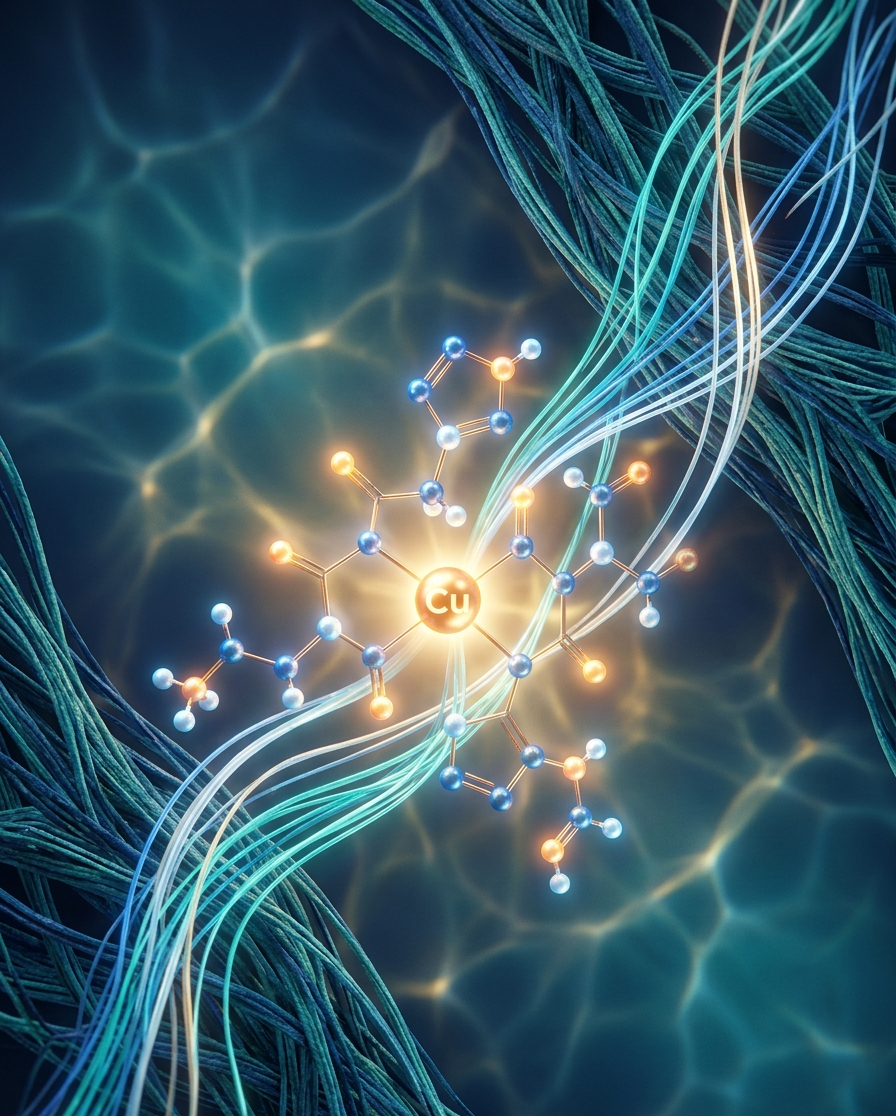
GHK-Cu, a human peptide complexed with copper, influences neural plasticity and regeneration through multiple mechanisms including upregulating neurotrophic factors, modulating gene expression, and exerting antioxidant and anti-inflammatory effects. This broad action suggests potential therapeutic implications for neurological disorders characterized by neurodegeneration and cognitive decline, although current evidence is predominantly preclinical.
What the AI assistants say
AI assistants collectively agree that GHK-Cu shows promising pro-plasticity and regenerative effects in neural tissue, but emphasize that the supporting evidence is almost entirely preclinical, with a notable absence of published human randomized trials for neurological disorders. They highlight GHK-Cu’s multi-target approach, which aligns with the complex nature of neurodegenerative diseases.
Several core mechanisms are consistently identified:
- Upregulation of Neurotrophic Factors: Assistants mention GHK-Cu increasing production of Nerve Growth Factor (NGF), neurotrophins NT-3 and NT-4, and also Brain-Derived Neurotrophic Factor (BDNF), Glial Cell Line-Derived Neurotrophic Factor (GDNF), and Vascular Endothelial Growth Factor (VEGF). These factors are crucial for neuronal survival, growth, axonal outgrowth, Schwann cell proliferation, myelination, and synaptogenesis.
- Gene Expression Modulation: GHK-Cu is noted for its ability to significantly change the expression of thousands of human genes (up to 31.2% or ≈4,000+ genes) involved in neuronal development, maintenance, DNA repair, antioxidant systems, glial function, inflammation, oxidative stress, tissue repair, and cell survival, often “resetting pathological patterns toward ‘health’ states.”
- Antioxidant and Anti-inflammatory Effects: The peptide upregulates antioxidant genes (e.g., SOD1) and directly blocks reactive oxygen species (ROS) formation, while also suppressing pro-inflammatory cytokines (e.g., TNF-α, IL-6, IL-17A) and pathways like NF-κB, thereby reducing neuroinflammation.
- Copper Homeostasis: GHK-Cu delivers essential copper to cells, restoring levels in deficient neural tissue and potentially buffering excess free copper, which can promote oxidative stress and protein aggregation.
- Neural Regeneration: Assistants note GHK-Cu’s role in enhancing axonal differentiation, increasing axon count, and boosting the rate of myelinated nerve fiber regeneration, along with supporting Schwann cell proliferation.
Other mechanisms mentioned include DNA repair and proteostasis upregulation, anxiolytic/analgesic brain effects, synaptogenesis, dendritic arborization, neurogenesis, and astrocyte modulation (improving neurological recovery, reducing edema, promoting neuron survival). Animal studies in models of Alzheimer’s disease, aging cognitive decline, and peripheral nerve injury have shown promising results, such as delayed cognitive impairment, reduced amyloid plaques, lowered inflammation, enhanced spatial memory, and accelerated nerve regeneration. However, AI assistants collectively caution that gene expression changes don’t automatically translate to human benefit, and note the significant challenge of translating animal doses to human equivalents, alongside unknown long-term safety and optimal administration routes in humans.
What the research actually shows
GHK-Cu, a human peptide also known as glycyl-L-histidyl-L-lysine complexed with copper, has been shown to significantly influence neural plasticity and regeneration, with potential implications for the treatment of neurological disorders. The peptide has been found to stimulate the outgrowth of cultured nerves, as demonstrated by Lindner et al. [48, 49], and to increase the production of nerve growth factor (NGF) and neurotrophins NT-3 and NT-4 when nerve stubs were placed in a collagen tube impregnated with GHK [50]. This increase in neurotrophic factors led to enhanced migration of cells into the collagen tube and sped up the regeneration of nerve fibers. Additionally, GHK increased axon count and proliferation of Schwann cells compared to the control group, indicating a positive effect on neural regeneration [50].
The influence of GHK-Cu on neural plasticity is further supported by its ability to modulate gene expression relevant to nervous system health and function [1]. Studies using the Broad Institute Connectivity Map have shown that GHK peptide can reset pathological gene expression patterns back to a healthier state by modulating the expression of multiple genes [1]. This gene regulatory function is crucial in the context of neurological disorders, as epigenetic modification of gene expression is considered a link between the environment, aging, and neurodegeneration [3].
In terms of implications for neurological disorders, GHK-Cu has been recommended as a potential treatment for conditions such as Alzheimer’s disease and Parkinson’s disease, which are characterized by neurodegeneration and cognitive decline [1]. The peptide’s ability to increase collagen, decorin, angiogenesis, and nerve outgrowth, as well as its antioxidant, anti-inflammatory, anti-pain, and anti-anxiety effects, make it a promising candidate for therapeutic intervention in these disorders [1]. Moreover, GHK-Cu’s capacity to increase cellular stemness and the secretion of trophic factors by mesenchymal stem cells suggests potential for activating stem cells and promoting tissue repair in the nervous system [1].
The administration of GHK-Cu as a therapeutic agent for neurological disorders is supported by evidence of its high uptake into human skin and its ability to pass through the lipids of the epidermal barrier, indicating a high possibility that it could also pass the blood-brain barrier [66, 67]. This suggests that GHK-Cu could be administered intravenously or orally when encapsulated into liposomes, making it a potentially viable treatment option for neurological conditions [5].
In conclusion, GHK-Cu’s influence on neural plasticity and regeneration, its ability to modulate gene expression, and its potential to pass the blood-brain barrier, position it as a promising therapeutic agent for the prevention and treatment of neurological disorders associated with neurodegeneration and cognitive decline. Further research and clinical studies are warranted to fully explore its potential in this context. Key Takeaway: GHK-Cu’s ability to stimulate neural regeneration, modulate gene expression, and potentially cross the blood-brain barrier makes it a promising therapeutic agent for neurological disorders.
Where the AI consensus and the research diverge
While both the AI assistants and the corpus-grounded research highlight GHK-Cu’s potential and the preclinical nature of current evidence, there are notable differences in emphasis and detail. The AI assistants provide a broader, more granular list of mechanisms and specific animal study findings, including quantitative data on neurite outgrowth (e.g., 20-50% increase in cultured neurons) and gene modulation (affecting thousands of genes), along with caveats about the translational gap from gene expression to clinical outcome. They also extensively detail various neurotrophic factors (BDNF, GDNF, VEGF) beyond NGF and NT-3/NT-4.
Conversely, the research corpus is more direct and specific about the initial findings of GHK stimulating nerve outgrowth (Lindner et al. [48, 49]) and the precise context of neurotrophic factor increase in a collagen tube model [50]. Crucially, the corpus introduces the concept of GHK-Cu’s high uptake into human skin and its ability to pass the epidermal barrier, inferring a “high possibility” of blood-brain barrier passage, and suggesting intravenous or oral liposomal administration as a potential future delivery route [5, 66, 67]. This specific aspect of potential human delivery routes is not explicitly covered by the AI assistants, who focus more on intranasal administration in animal models.
Bottom line: GHK-Cu demonstrates significant preclinical promise for influencing neural plasticity and regeneration through diverse mechanisms, suggesting potential for neurological disorder treatments, though human clinical evidence is currently lacking.
References
- GHK Peptide as a Natural Modulator of Multiple Cellular — Loren Pickart
- GHK-Cu may Prevent Oxidative Stress in Skin by Regulating — Pickart, Loren
- The Effect of the Human Peptide GHK on Gene Expression — Pickart, Loren
- The Human Tripeptide GHK-Cu in Prevention of Oxidative — Loren Pickart
- The human tri-peptide GHK and tissue remodeling — Loren Pickart(Skin Biology, 4122 Factoria Boulevard
Continue your research
Part of our GHK-Cu: Brain & Nervous System guide.
- How does GHK-Cu interact with the nervous system, and what are its implications for neurodegenerative diseases?
- What research supports the neuroprotective effects of GHK-Cu, and how might it be utilized in the treatment of neurological disorders?
- How does GHK-Cu affect neural cell survival and function, and what are its implications for neurodegenerative diseases?
Related topics:
- How does GHK-Cu influence copper homeostasis, and what are the potential health implications of these effects?
- What clinical studies provide evidence for the effectiveness of GHK-Cu in promoting tissue repair and regeneration?
- How does the efficacy of GHK-Cu compare to other peptide-based treatments in terms of wound healing and tissue regeneration?