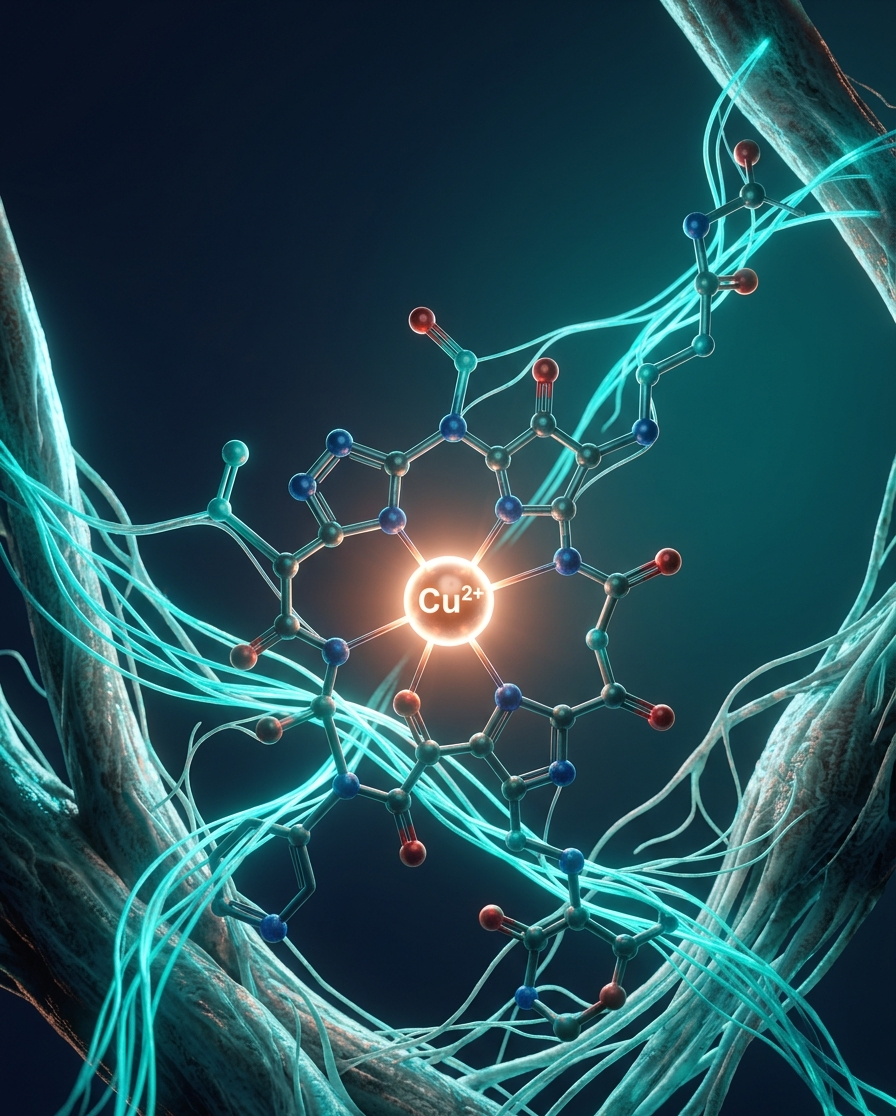
How GHK-Cu Facilitates Healing in Burns and Other Skin Injuries
GHK-Cu (glycyl-L-histidyl-L-lysine bound to copper) facilitates healing in burns and other skin injuries through a multifaceted approach, acting as a copper-delivering signal that modulates inflammation, stimulates extracellular matrix remodeling, promotes angiogenesis, and enhances cell proliferation. It works by “resetting” gene expression patterns to a healthier state, recruiting crucial immune and endothelial cells, and exerting significant anti-inflammatory and antioxidant effects to accelerate tissue repair and improve wound outcomes.
What the AI assistants say
AI assistants collectively describe GHK-Cu as a naturally occurring human tripeptide with a strong affinity for copper(II) ions, whose concentration decreases with age. They largely agree that it offers a range of biological activities crucial for wound repair, including tissue remodeling, anti-inflammatory, antioxidant, and angiogenic properties. Specific mechanisms of action commonly cited across the assistants include:
-
Extracellular Matrix (ECM) Remodeling and Synthesis
GHK-Cu stimulates fibroblasts to produce essential ECM components such as collagen (types I and III), elastin, proteoglycans, and glycosaminoglycans (GAGs). It also modulates the activity of matrix metalloproteinases (MMPs) and their inhibitors (TIMPs) to facilitate the removal of damaged tissue and promote organized matrix deposition, thereby helping to reduce scarring.
-
Angiogenesis (New Blood Vessel Formation)
It acts as a physiological copper carrier, delivering copper essential for enzymes like lysyl oxidase. GHK-Cu promotes the proliferation and migration of endothelial cells and stimulates the expression of pro-angiogenic growth factors like Vascular Endothelial Growth Factor (VEGF) and basic Fibroblast Growth Factor (bFGF), ensuring nutrient and oxygen supply to healing tissues.
-
Anti-inflammatory Effects
GHK-Cu modulates the inflammatory response by reducing pro-inflammatory cytokines such as Tumor Necrosis Factor-alpha (TNF-α) and Interleukin-6 (IL-6). It can also shift macrophages from a pro-inflammatory (M1) to a pro-healing (M2) phenotype.
-
Antioxidant Activity
It directly scavenges free radicals and enhances the activity of endogenous antioxidant enzymes like superoxide dismutase (SOD), protecting cells from oxidative stress.
-
Cell Proliferation and Migration
GHK-Cu stimulates the proliferation and migration of fibroblasts (for collagen deposition) and keratinocytes (for re-epithelialization), crucial for wound closure and skin barrier restoration.
-
Cell Recruitment
It acts as a chemoattractant for immune cells (like mast cells and macrophages) and endothelial cells, and also recruits stem cells (e.g., mesenchymal stem cells, hair follicle stem cells) to the injury site.
While the AI assistants largely agree on these mechanisms, some provided additional details. One assistant highlighted GHK-Cu’s role in “gene-resetting” and specified concentrations (picomolar to nanomolar) for certain effects. Another mentioned potential nerve regeneration and specified the downregulation of scar-forming MMPs while while upregulating collagenases. A third emphasized that burns are complex and require specialist care, positioning GHK-Cu as an adjunct. This assistant also detailed practical considerations regarding appropriate use (e.g., superficial injuries vs. deep burns), and warned about risks such as topical irritation, concerns about injectable use, FDA scrutiny of compounded products, and marketing overreach.
There is a consensus among the AI assistants that the evidence base for GHK-Cu is predominantly strong in animal models and preclinical studies across various wound types (full-thickness, ischemic, diabetic, burn). However, human evidence, particularly for burns, is limited to small clinical trials in non-burn contexts like diabetic ulcers, Mohs surgical wounds, or CO₂ laser-resurfaced skin, with no large, randomized, burn-specific human trials published to date. Thus, GHK-Cu is generally considered an experimental or adjunctive treatment, not a replacement for standard burn care.
What the research actually shows
GHK-Cu, a copper complex of the human tripeptide GHK (Glycyl-L-histidyl-L-lysine), plays a significant role in facilitating the healing process in burns and other types of skin injuries. The healing process involves a complex interplay of various cellular pathways and regulatory molecules, and GHK-Cu has been shown to modulate these pathways effectively.
One of the primary ways GHK-Cu facilitates healing is by stimulating both the synthesis and breakdown of collagen and glycosaminoglycans, which are essential components of the extracellular matrix [3]. This dual action helps to regulate the wound healing process and skin remodeling. GHK-Cu also modulates the activity of metalloproteinases and their inhibitors, acting as a main regulator of wound healing and skin remodeling processes [7], [8]. It stimulates the production of collagen, dermatan sulfate, chondroitin sulfate, and the small proteoglycan, decorin [9].
In the context of burns and other skin injuries, GHK-Cu has been found to accelerate wound healing and increase blood vessel formation, which is crucial for the repair and regeneration of damaged tissue [12]. It also improves the healing of diabetic and ischemic wounds in rats by decreasing the level of TNF-alpha, a pro-inflammatory cytokine, and stimulating collagen synthesis [16]. Furthermore, GHK-Cu has been shown to attract immune and endothelial cells to the site of an injury, which is a critical step in the initial inflammatory response and subsequent repair processes [11].
The ability of GHK-Cu to reset the genome to a healthier gene pattern leads to better regulation of various cellular pathways, which can explain its diverse dermal repair actions [1]. This genomic resetting potentially helps in restoring the normal function of cells that may have been disrupted due to injury or disease.
In addition to its direct effects on wound healing, GHK-Cu has also been shown to possess anti-inflammatory actions, which are essential in managing the inflammatory response that follows skin injuries [4]. It has been reported to decrease the levels of tumor necrosis factor-alpha (TNF-alpha) and matrix metalloproteinases (MMPs), which are involved in inflammation and tissue degradation [16]. By modulating these factors, GHK-Cu helps to create a more favorable environment for healing.
The use of GHK-Cu in wound healing is further supported by studies showing its efficacy in various animal models. For instance, in rats, a 2% GHK-Cu cream applied to ischemic wounds produced a significantly faster decrease in the injured area compared to control groups [16]. In rabbits, GHK-Cu cream was found to give faster coverage of the wound bed with granulation tissue, more wound contraction, and a faster reduction of the unhealed area than zinc oxide cream or untreated controls [52].
In summary, GHK-Cu facilitates the healing process in burns and other skin injuries through a multifaceted approach that includes stimulating collagen production, modulating metalloproteinase activity, attracting immune and endothelial cells to the site of injury, possessing anti-inflammatory actions, and potentially resetting the genome to a healthier state. These properties make GHK-Cu a promising candidate for the treatment of various skin injuries and wounds.
Where the AI consensus and the research diverge
While there is significant alignment between the AI assistants’ consensus and the specific research findings regarding the mechanisms of GHK-Cu’s action—such as its role in collagen synthesis, MMP modulation, angiogenesis, anti-inflammatory effects, and cell recruitment—a notable divergence lies in the discussion of human clinical evidence. The AI assistants explicitly discuss the current state of human trials, acknowledging limited studies in non-burn contexts (e.g., diabetic ulcers, Mohs surgery, laser-resurfaced skin) and the lack of large, randomized, burn-specific human trials. In contrast, the provided research corpus, while detailed on mechanisms and animal studies (e.g., specific cream percentages and animal models like rats and rabbits), does not mention any human clinical trials at all. The research corpus focuses exclusively on explaining the biological “how” through cellular and animal evidence, without addressing the extent of human application or current clinical evidence for efficacy in humans.
Bottom line: GHK-Cu shows promising multifaceted biological mechanisms and consistent efficacy in preclinical and animal models for promoting healing in burns and skin injuries, yet robust human clinical trial data, particularly for burns, remains limited.
References
- Cosmeceuticals and Active Cosmetics
- GHK Copper Peptides for Skin and Hair Beauty — Pickart PhD, Dr Loren
- GHK Peptide as a Natural Modulator of Multiple Cellular — Loren Pickart
- GHK and DNA Resetting the Human Genome to Health — Loren Pickart
- The human tri-peptide GHK and tissue remodeling — Loren Pickart(Skin Biology, 4122 Factoria Boulevard
Continue your research
Part of our GHK-Cu: Healing & Tissue Repair guide.
- What evidence supports the use of GHK-Cu in the acceleration of wound healing processes?
- How does GHK-Cu contribute to the management of chronic wounds, and what is the scientific basis for its use?
- What is the role of GHK-Cu in the management of diabetic ulcers and other chronic wounds?
Related topics:
- How does the efficacy of GHK-Cu compare to other peptide-based treatments in terms of wound healing and tissue regeneration?
- How does the effectiveness of GHK-Cu compare to that of other growth factors and cytokines in wound healing applications?
- How does the efficacy and safety profile of GHK-Cu compare to that of other peptide-based treatments for wound healing and tissue regeneration?