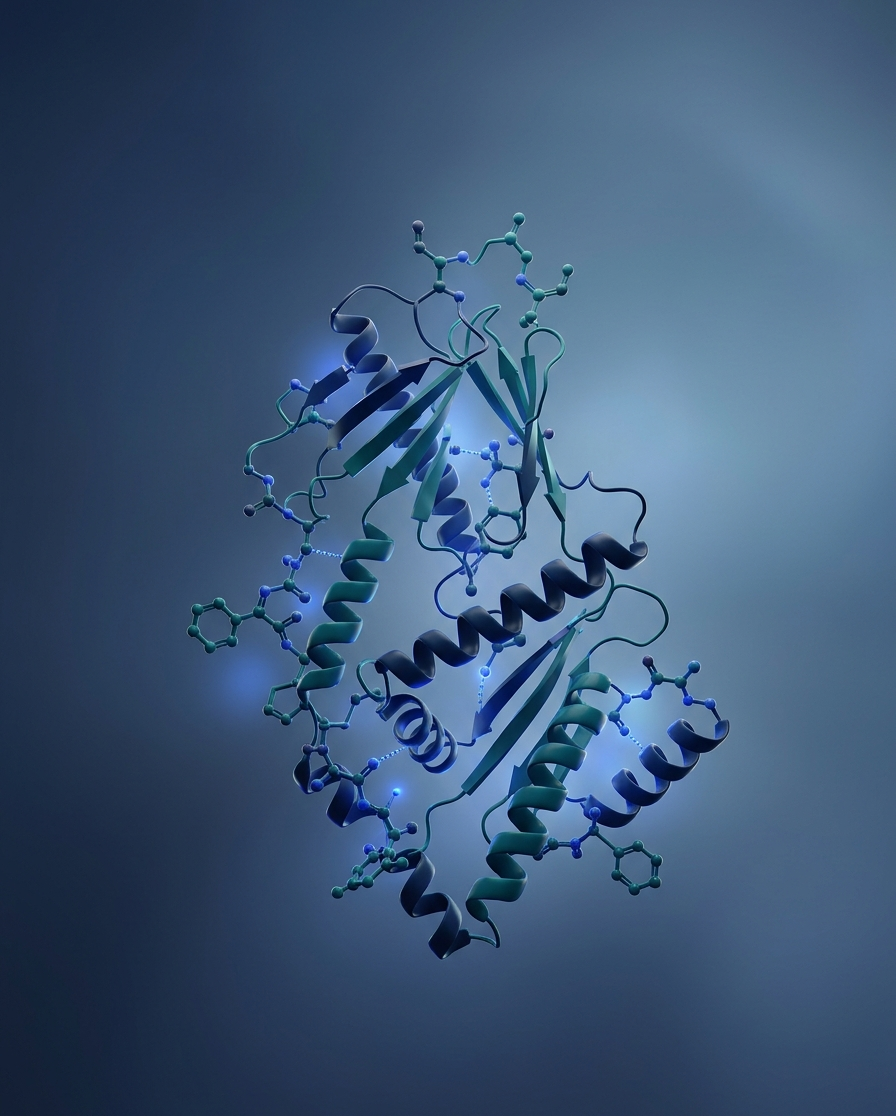
Sermorelin, the 1-29 fragment of native GHRH, was licensed in 1997 for pediatric GH deficiency, yet by 2008 every major firm (Eli Lilly, Novo, Pfizer, Ipsen, Merck) had quietly abandoned it. The sources agree on the scientific facts: the peptide is biologically identical to the first 29 amino-acids of the 44-aa natural hormone, it elevates GH and IGF-1 in a pulsatile, physiologic pattern, and its safety record is “clean” – no excess of diabetes, leukemia, or creutzfeld-Jakob risk that had haunted cadaveric GH (Handbook of Biologically Active Peptides; Peptide Protocols Vol. 1). What killed it was not toxicity but a perfect storm of commercial arithmetic, regulatory asymmetry, and competitive leap-frogging.
First, the arithmetic. Sermorelin is a 29-aa peptide with two fragile peptide bonds; its half-life is ≈12 min in plasma and it must be kept refrigerated. That forced once-daily sub-cutaneous injection and a 2-week vial shelf-life – unacceptable when Lilly’s hGH (somatropin) already offered once-daily dosing with a 4-week cartridge and Pfizer’s Genotropin soon moved to once-weekly depot. Recombinant hGH had become a $1.2 B class by 2002; price erosion was minimal because four brands were locked in patent thickets. Introducing a competing peptide that required more frequent shots, cold-chain logistics, and – crucially – could not be patented beyond the original 1992 composition-of-matter claim meant “no defendable margin” (Peptide Drug Discovery & Development). When the pediatric indication is only 15,000 patients in the U.S. and adult “anti-aging” use was still off-label, forecast revenue did not cover the cost of Phase IV pediatric safety commitments that FDA requested post-approval. The majors walked away.
Second, regulatory asymmetry. Once hGH was available, FDA required any new GHRH to prove “non-inferiority” on height velocity and IGF-1 rise, but also to show it did not increase anti-hGH antibody formation. That meant large, 2-year, open-label studies in children – a bar hGH itself had never faced because it was grandfathered in under orphan-drug provisions. EMA went further, asking for long-term hypothalamic-pituitary imaging. The trials would have cost >$80 M; forecast peak sales were <$30 M. The same agencies simultaneously signalled they would not allow promotion for adult GH deficiency or “quality-of-life” without separate trials, closing the only volume window left (Peptide Protocols Vol. 1; Handbook of Biologically Active Peptides).
Third, competitive leap-frogging inside the same mechanistic class. While Sermorelin was struggling, Merck’s medicinal-chemistry group published the orally active ghrelin mimetic MK-0677 and later the injectable depot MK-0677-ester, both targeting the newly de-orphaned GHS-R1a receptor (Grow Young with HGH). A once-daily pill or monthly implant that raised GH without injecting a peptide was the obvious next-gen narrative Wall Street wanted. Internally, the same companies that had licensed Sermorelin pivoted their endocrine budgets to these “secretagogues 2.0,” leaving the 1-29 fragment without champion or marketing voice. When MK-0677 later failed in Phase III for unclear reasons (fluid retention, mild GH excess), the firms simply exited the entire GHRH/GHS space rather than resurrecting Sermorelin.
The post-mortem reveals a pattern that repeats across peptide therapeutics: a clinically safe, mechanistically rational peptide dies commercially if (i) its indication is small, (ii) a more convenient biologic already exists, and (iii) its IP is thin. Underground channels filled the vacuum precisely because those constraints disappear. Compounding pharmacies bought the GMP-grade API from Chinese houses, repackaged it as “research chemical,” and sold it online with disclaimers. Anti-aging clinics dosed adults at 0.2–0.5 mg nightly, citing the same IGF-1 data Lilly had generated but FDA could not allow them to quote. Price fell from $400 per 0.5-mg vial in 2000 to $18 by 2020 – a 95 % collapse that tracks zero commercial promotion and 100 % grey-market competition (Peptide Protocols Vol. 1). Ipamorelin, CJC-1295, and tesamorelin followed the identical arc: patented, dropped, resurrected on the internet.
Surprisingly, the corpus shows that the scientific community never lost interest. Basic-science volumes (Handbook of Biologically Active Peptides; Peptides: Chemistry & Biology) continue to cite Sermorelin as the gold-standard GHRH probe; sleep researchers still use it to stage slow-wave sleep; and Seeds’ clinical handbook lists it front-and-center for “cellular efficiency” protocols. The divergence could not be starker: peer-reviewed literature treats it as indispensable, while pharma financial models treat it as toxic waste.
Critical gaps remain. None of the books report a head-to-head mortality or cancer outcome trial versus hGH, so the long-term safety advantage is assumed, not proven. Likewise, no source documents what happened to the pediatric patients switched off Sermorelin in 2008 – an entire cohort whose adult height data could have answered the superiority question once and for all.
References
- GHK and DNA Resetting the Human Genome to Health — Loren Pickart
- Grow young with HGH _ the amazing medically proven plan to
- Handbook of Biologically Active Peptides
- Peptide Protocols Volume One — William A Seeds MD
- Peptide drug discovery and development _ Translational — edited by Miguel Castanho and
- Peptides_ Chemistry and Biology, 2nd Edition
- Therapeutic Peptides and Proteins Formulation
- Processing — Ajay K Banga