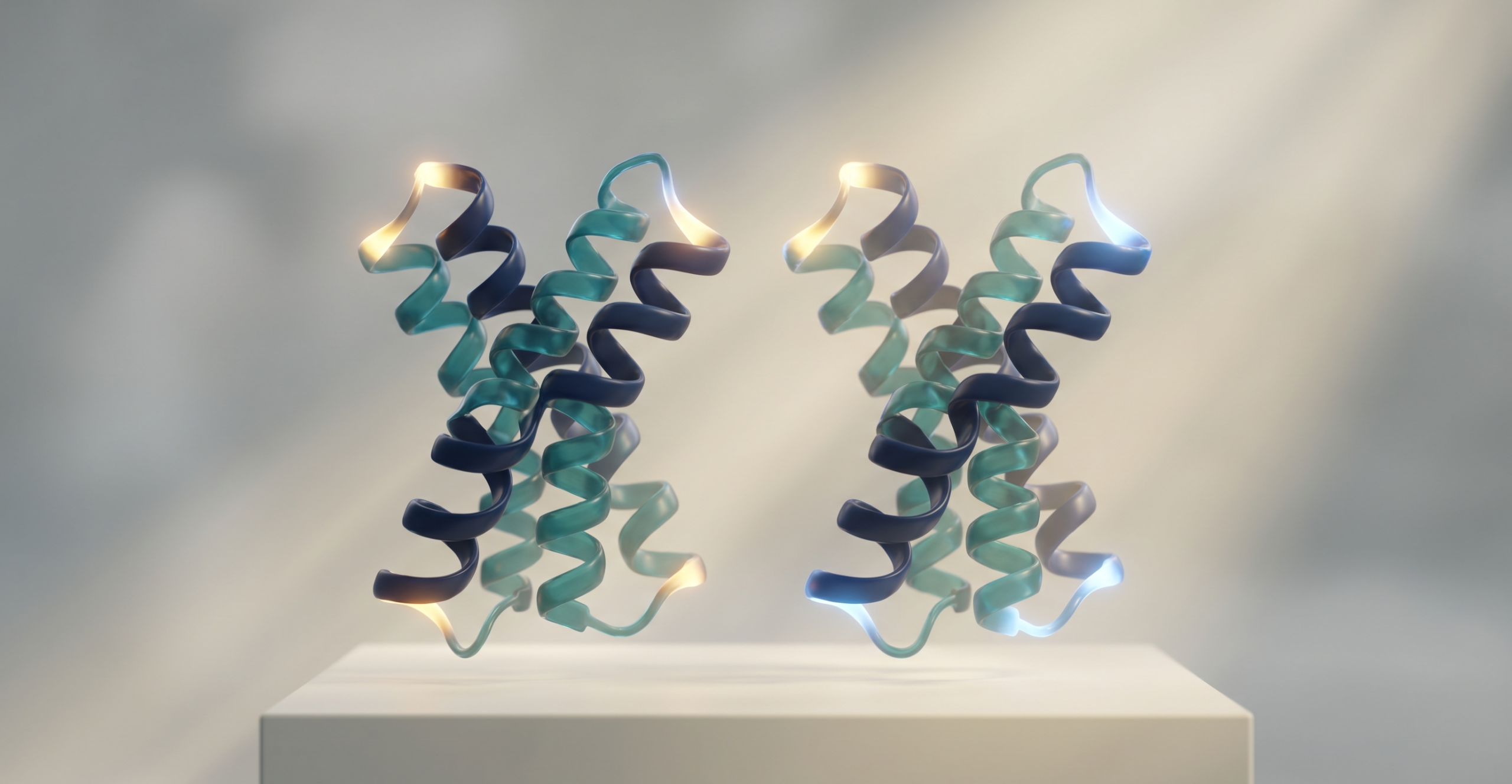
In the field of growth hormone-releasing therapies, Ipamorelin and Sermorelin Acetate are two peptides that have gained attention for their potential to stimulate growth hormone (GH) release. This article provides a neutral, factual comparison of these two compounds, examining their mechanisms, documented benefits, and protocols for use.
| Ipamorelin | Sermorelin Acetate | |
|---|---|---|
| Drug class | Growth hormone-releasing peptide (GHRP) | Synthetic analog of Growth Hormone-Releasing Hormone (GHRH) |
| Mechanism | Stimulates GH release by binding to GHS-R, requiring endogenous GHRH for maximal effect [2] | Stimulates GH synthesis and release from the pituitary gland, increasing circulating GH levels [29] |
| Primary use | Body composition changes, athletic performance enhancement [2] | Diagnosis and treatment of growth hormone deficiency [29] |
| Administration | 50-200 mcg, subcutaneously, 1-3 times daily [2] | 0.1-0.2 mg, subcutaneously, 2-3 times daily [29] |
| Evidence strength | Experimental, research-documented benefits [2] | Clinical use, research-documented benefits [29] |
| Key risks / contraindications | GH excess-related side effects, not recommended for individuals with cancer or pituitary disorders [2] | Exacerbation of GH excess conditions, not recommended for individuals with cancer or pituitary disorders [3] |
Mechanism of Action
Ipamorelin and Sermorelin Acetate both target the release of growth hormone (GH) from the pituitary gland, but they do so through different mechanisms. Ipamorelin is a synthetic growth hormone-releasing peptide (GHRP) that acts as an agonist of the growth hormone secretagogue receptor (GHS-R), requiring endogenous hypothalamic GHRH for maximal GH stimulation [2]. In contrast, Sermorelin is a synthetic analog of endogenous Growth Hormone-Releasing Hormone (GHRH), consisting of the first 29 amino acids of the 44-amino acid polypeptide hormone, directly stimulating GH synthesis and release [29].
Research-Documented Benefits
Both peptides have been shown to stimulate the release of GH, with Ipamorelin supporting lean muscle growth and fat loss, as well as increasing cell synthesis and insulin secretion [2]. Sermorelin, on the other hand, has been documented to significantly promote GH release, improving serum concentrations of GH and IGF-1 [1]. The best time to inject Sermorelin is right before sleeping to increase the amplitude of the largest natural GH pulse, which occurs during the first REM cycle [1].
General-Knowledge Benefits
Beyond the research-documented benefits, Ipamorelin is known to improve body composition by promoting fat loss and potentially building skeletal muscle mass [2]. It may also enhance nutrient absorption and utilization for muscle growth [2]. Sermorelin is used in clinical medicine to diagnose pituitary deficiency by measuring the serum GH response following a single IV infusion [29] and is commonly used in the treatment of growth hormone deficiency in children, providing benefits such as enhanced IGF-1 output and increased linear height [29].
Administration and Protocols
The typical injectable protocol for Ipamorelin is experimental, with doses ranging from 50-200 mcg, administered subcutaneously 1-3 times daily [2]. Sermorelin, with established clinical use, is administered at doses ranging from 0.1 mg to 0.2 mg, subcutaneously 2-3 times daily [29].
Key Risks and Contraindications
Both Ipamorelin and Sermorelin Acetate carry risks associated with GH excess, such as fluid retention, joint pain, and potential worsening of sleep apnea [2]. They are not recommended for individuals with a history of cancer or pituitary disorders due to the potential for exacerbating GH-related conditions [2][3].
References
- Aging and genome maintenance_ lessons from the growth hormone receptor knockout mouse
- Anabolics
- Anabolics 10th Edition
- Basic and Clinical Aspects of Growth Hormone
- Biochemistry
- Boundless Upgrade Your Brain, Optimize Your Body and Defy — Ben Greenfield
- Endocrinology_ Adult and Pediatric
- Energy Metabolism and Obesity_ Research and Clinical Applications
- GHRH, GH, and IGF-1_ Basic and Clinical Advances
- Grow young with HGH _ the amazing medically proven plan to
- Growth Hormone Secretagogues
- Growth Hormone Secretagogues in Clinical Practice
- Growth hormone releasing peptides
- Handbook of Biologically Active Peptides
- Life Force
- Live Longer, Live Well_ The 6 Lifestyle Pillars for a Long and Healthy Life
- Living a Fully Optimized Life
- Mass Spectrometry in Medicinal Chemistry
- Peptides and Non Peptides of Oncologic and Endocrine Interest
- Performance-Enhancing Substances in Sport and Exercise