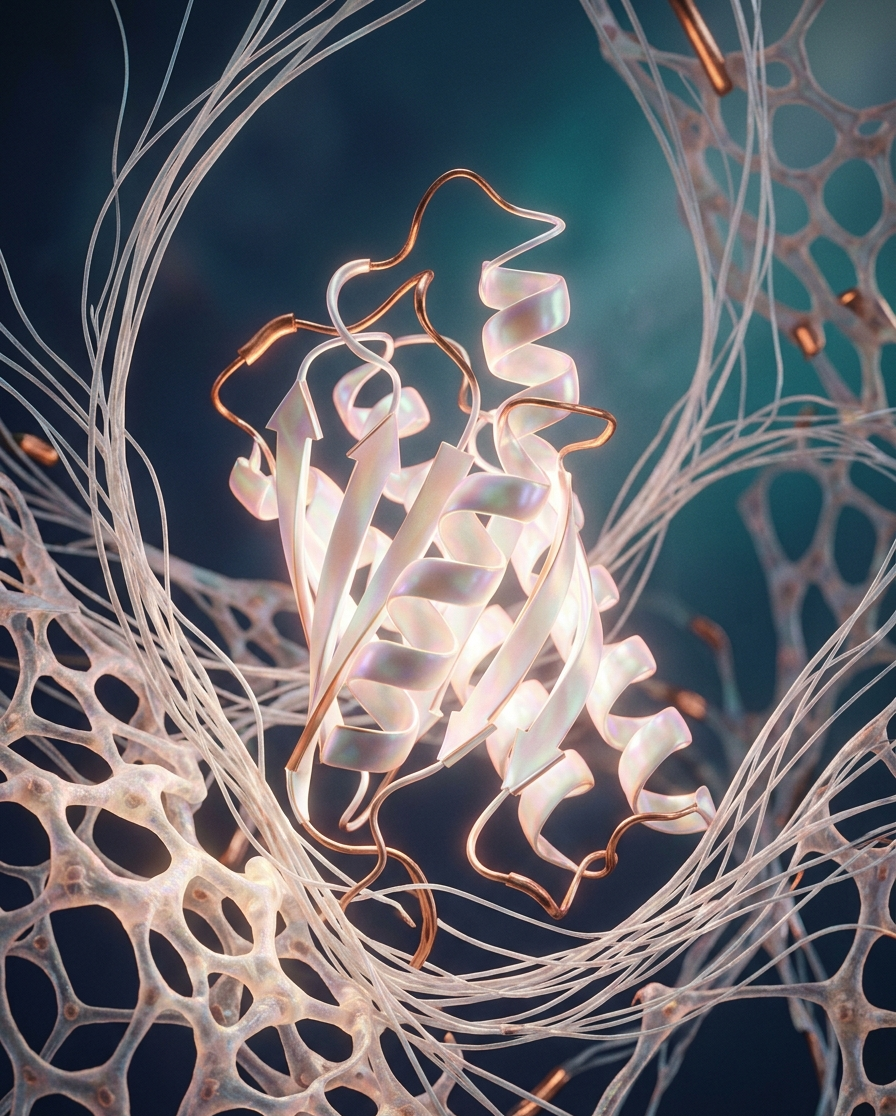
An evolutionary biologist would say the human body “listens” so intently to externally administered peptides because the molecules are literally ancestral language. Every excerpt that touches evolutionary history agrees that short peptides were the first signaling system life ever invented. In The Mind-Gut Connection we learn that insulin-like and gut-peptide-like molecules have been recovered from billion-year-old microbes; the peptides we now inject or spray are modern replicas of messages that crossed the primordial ocean long before nerves or hormones existed. Because the basic 2- to 50-amino-acid “words” have never changed, human cells recognize them the way a native speaker recognizes a childhood dialect. The Handbook of Biologically Active Peptides drives the point home: pheromone peptides across phyla show “high solubility, specificity and variability” precisely because the receptor-peptide lock-and-key is the oldest, most conserved communication technology on Earth. When a clinician gives a synthetic peptide, the body does not perceive a “drug”; it hears an ancient command it never forgot.
That conserved antiquity explains why the response can be so dramatic. Peptide Protocols Volume One documents patients who walk out of wheelchairs or reverse organ failure after short peptide cycles; from an evolutionary standpoint these are not miracles but instances of re-activating primordial repair programs that are still encoded in every cell. Suresh Rattan’s chapter in the same volume argues that small peptides “interact directly with DNA” because they were the original transcription factors—information molecules that told early genomes when to divide, rest or defend. The human genome still carries those cis-regulatory motifs, so an exogenous peptide can flip master switches that small-molecule drugs cannot reach.
The second evolutionary reason for potency is diet. For hundreds of millions of years animals digested other organisms and absorbed the resulting peptide fragments; consequently, gut and immune surveillance systems evolved to treat circulating peptides as both food and information. The Mind-Gut Connection notes that microbial peptides in fermented broths triggered mammalian insulin signaling, showing that the body expects to receive external peptide instructions at every meal. Thus, when physicians deliver peptides nasally or subcutaneously they are hijacking a nutrient-sensing pathway the gut–brain axis keeps permanently open. Because the system was shaped to extract meaning from dietary peptides, it is exquisitely sensitive and almost impossible to down-regulate completely.
A third layer is symbiosis. Many of the peptides now manufactured in GMP suites began as microbial metabolites. The evolutionary biologist would say we are not “drugging” a human; we are restoring a conversation with the microbiome that antibiotics, processed food and sterile living have muted. Re-introducing these signals re-creates the chemical ecology in which our physiology evolved, explaining the broad, rapid improvements in immunity, mood and metabolism reported in Peptide Protocols.
The most counter-intuitive finding is that longer half-life—usually prized in drug design—may actually blunt the evolutionary fidelity of the signal. Native peptides are meant to appear, speak and vanish; their rapid catabolism is part of the message. Seeds notes that chemists now engineer “longer half-life to make the most of their impact,” yet the evolutionary view warns that keeping the microphone open after the sentence is finished could distort downstream pathways. No clinical data yet test whether ultra-stable analogues incur long-term fitness costs, a gap the books leave conspicuously open.
Experts also diverge on tolerance. Seeds and Castanho insist peptides are “recognizable and tolerated by the body,” while the Handbook concedes that repeat dosing can raise anti-peptide antibodies in a subset of patients. Evolution would predict that peptides too distant from the endogenous sequence (especially those with non-natural D-amino acids or lipid tails) will eventually be treated as foreign proteins. The corpus offers no systematic study of how often this happens or whether it carries clinical consequences.
Finally, the evolutionary lens predicts that the biggest therapeutic wins will come from the oldest peptides. Humanin, a mitochondrial peptide whose sequence is shared across vertebrates, is already being explored for neuro-degeneration and diabetes (Age Later). Conversely, peptides that evolved recently—such as the placental hormones unique to higher primates—may produce more variable responses because receptors have had less time to perfect specificity.
References
- Age later health span, life span, and the new science of — Nir Barzilai
- Fantastic voyage _ live long enough to live forever — Grossman
- Terry
- Kurzweil
- Kurzweile
- Handbook of Biologically Active Peptides
- I think that the small peptides are the best for healthy — Suresh I S Rattan
- Peptide Protocols Volume One — William A Seeds MD
- Peptide drug discovery and development _ Translational — edited by Miguel Castanho and
- Peptides_ Chemistry and Biology, 2nd Edition